Corporate Fuel Card: Fewer Receipts, Better Track of Things
Fill up. Charge. Settle the bill. What drivers can do in a flash often means extra work for the accounting department.
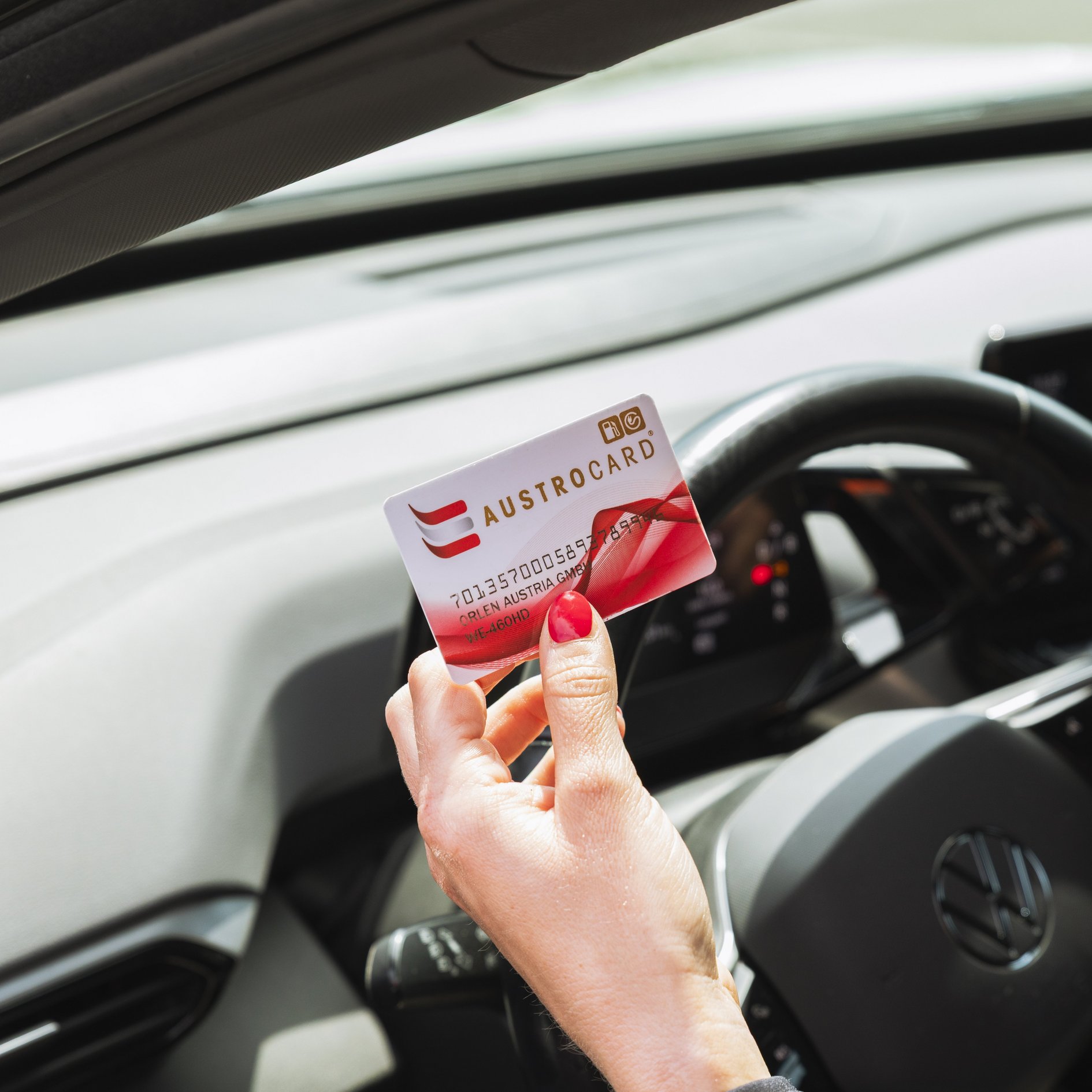
A corporate fuel card consolidates these processes. With the AUSTROCARD, fuel costs, charging transactions, and other mobility services are managed centrally.
Drive first. Don't look for receipts afterward.
A fuel card works similarly to a traditional payment card but is tailored to businesses and fleets. Employees can use it to make cashless payments on the go, while the company receives a centralized statement.
With the AUSTROCARD, you can, among other things:
- Fill up with gasoline and diesel
- Charge electric vehicles
- Pay for car washes
- Settle tolls and other mobility services
This transforms many individual expenses into clearly tracked mobility costs.
Paperwork? You can skip that

With the AUSTROCARD, transactions are tracked and settled centrally. Fueling and charging transactions can also be tracked in the online customer portal.
This offers:
- fewer individual receipts
- clear allocation of expenses
- better cost control
- less work for the accounting department
The AUSTROCARD can also be integrated into existing administrative and accounting systems. Transaction data can be imported automatically.
And what does the accounting department have to say about that?
With the AUSTROCARD, fuel costs and other mobility expenses are centrally tracked and allocated to vehicles, drivers, or products, for example.
Companies receive a consolidated, input tax-deductible invoice.
Whether and to what extent costs or input tax can be claimed for tax purposes depends on the specific requirements. If in doubt, it is advisable to consult with a tax advisor.
A card can do more than just process payments
-
Knowing what needs to be done and where
In the online customer portal, you can analyze expenses and transactions in detail—for example, by vehicle, driver, or product.
This makes it clear where costs are incurred and how mobility expenses in the fleet are trending.
-
Not every card has to do everything
Companies can set permissions and limits on a case-by-case basis.
For example, this allows them to control which services can be paid for with a card or within what limits it may be used.
This is particularly useful when vehicles or employees have different requirements.
-
Just because your card is gone doesn't mean everything is gone
If an AUSTROCARD is lost, it can be blocked.
Custom limits and permissions give companies additional control over how and for what purposes the cards are used.
-
Diesel meets Electric
Many fleets are changing. In addition to traditional diesel and gasoline vehicles, electric vehicles are becoming an increasingly common sight on the road.
With the AUSTROCARD, companies don’t have to use different solutions for this. Fueling and charging can be billed using the same mobility card.
At what point does a fuel card become worthwhile?
You don’t need a huge fleet to make this work.
A fuel card can be useful even if you have just a few company vehicles in regular use. However, with each additional vehicle, the benefits of centralized management grow.
It’s especially practical for companies that:
- manage multiple vehicles
- refuel or charge regularly
- want to track mobility costs centrally
- want to organize billing more easily
- want to keep a closer eye on their fleet costs
Because in the end, it’s pretty simple:
The more vehicles on the road, the more important it is to maintain an overview.
FAQs
Whether and to what extent fuel costs can be claimed for tax purposes depends on business use, the type of vehicle, and the applicable tax regulations.
In any case, a fuel card makes it easier to document and allocate the relevant expenses.
Transactions processed through AUSTROCARD are billed in a consolidated statement. In addition, companies can track individual transactions in the online customer portal.
This eliminates the need to manage numerous individual fuel receipts separately.
Yes. With the AUSTROCARD, companies can not only fill up their vehicles but also charge electric vehicles.
This is especially convenient for fleets that include vehicles with different types of powertrains.
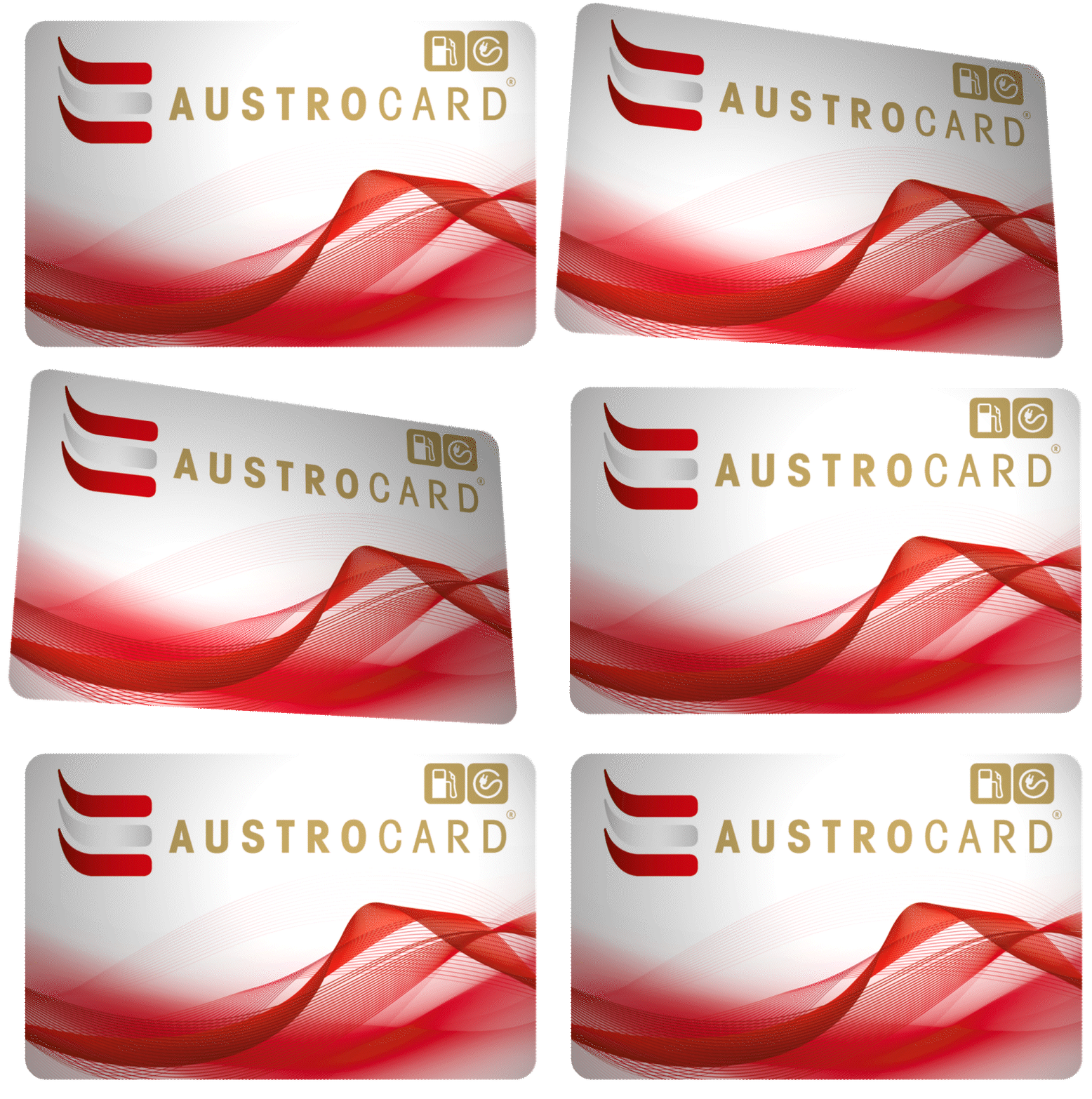
Yes. Companies can apply for multiple AUSTROCARDs and configure them according to the needs of their fleet.


![[Translate to English:]](/fileadmin/_processed_/0/7/csm_gEWINNSPIEL_AUGUST_9c692ffed2.png "[Translate to English:]")